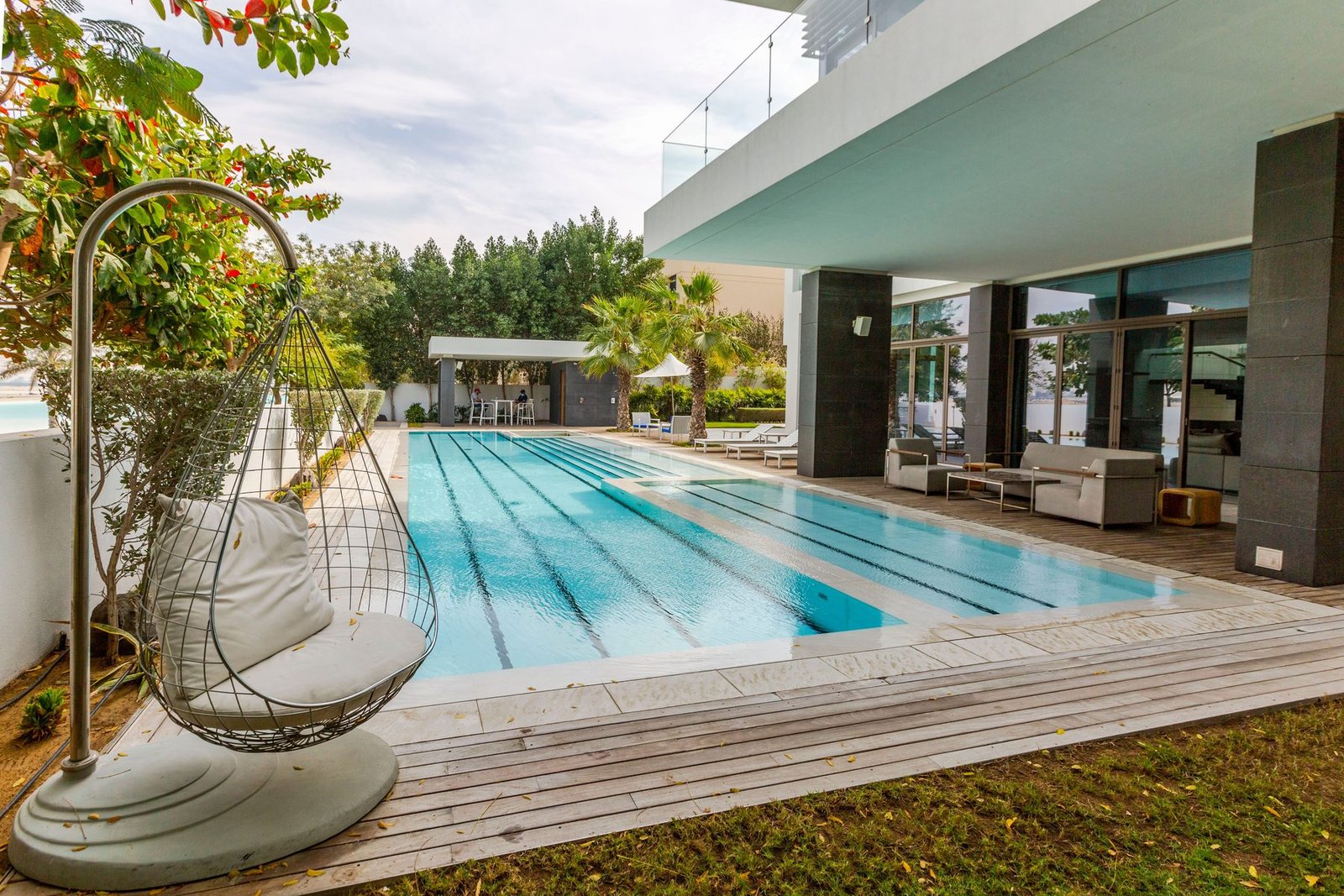
Pool temperature depends on weather, shade, water movement and surface exposure. Heating or cooling equipment should be selected around the property rather than a generic label.
Why Dubai pools need temperature planning
Outdoor pool water follows the surrounding climate. Strong sun can make an unshaded pool uncomfortable during hot periods. Cooler winter evenings can reduce use at the other end of the year. The same pool may need cooling and heating at different points.
Shade from the villa, trees or a pergola changes the load. Wind increases evaporation and heat loss. Waterfalls also exchange heat with the air. A temperature plan should consider these conditions before equipment is selected.
Pool chillers
A swimming pool chiller removes heat from circulating water. It sits within the plant system and needs sufficient flow, ventilation and electrical capacity. The unit location matters because rejected heat needs somewhere to go.
A chiller is most useful when the pool is exposed and used during hot weather. It should not fight an uncovered pool with uncontrolled heat gain all day. Shade and a suitable cover can support the system and reduce unnecessary operation.
Pool heating
Heating supports use during cooler months and can be important for indoor pools or spas. Heat pumps transfer heat from the air into the water. Other systems may connect to the building plant. The suitable method depends on the property and available services.
Heating needs a realistic set point. Holding very warm water in an exposed outdoor pool increases evaporation. It also changes disinfectant demand. The cover, circulation schedule and water chemistry should work with the heating plan.
Heat-pump placement
A heat pump or reversible unit needs clear airflow. Installing it inside a sealed plant room reduces performance and traps heat. The unit should remain accessible for cleaning and service.
Noise also matters. Equipment beside a bedroom, neighbour boundary or outdoor seating area can become intrusive. Anti-vibration supports and thoughtful orientation reduce transmitted sound. The plant route should avoid long unnecessary pipe runs.
Covers and surface control
The pool surface is where much of the heat exchange happens. A cover can reduce evaporation and support heating. It can also keep dust out when the pool is not used. Different covers have different purposes, so safety and thermal covers should not be treated as the same product.
Cover storage needs planning. A cover that is difficult to move is often left unused. The roller position should not block the main view or access route. Cleaning the cover also prevents trapped dirt from returning to the pool.
Circulation and temperature distribution
Temperature equipment only treats water that reaches it. Return placement and pump settings affect how evenly heat or cooling spreads. A spa spillover or large water feature can change the balance.
Separate temperature circuits may be useful where a spa and pool need different set points. Shared plant can work, but valve control must be clear. Incorrect settings can send heated spa water into the pool or leave the spa with weak circulation.
Water chemistry at different temperatures
Warm water changes chemical demand and can support faster biological growth. Scale can also form more readily on heat exchangers when calcium and pH are poorly controlled. Chilled water has its own balance considerations.
Temperature equipment should be included in the maintenance routine. Heat exchangers, strainers and airflow surfaces need inspection. Water chemistry protects the equipment as much as it protects the pool finish.
Integrating controls
Temperature controls can sit on a local panel or connect to pool automation. Clear schedules prevent heating and cooling from operating against each other. Sensors need a position that reflects actual pool water rather than a hot pipe near the plant room.
Remote control is useful when it reports reliable information. It does not replace maintenance. A fault code, low flow or dirty exchanger still needs physical inspection. The control setup should remain simple enough for the property team to understand.
Setting realistic operating goals
Temperature control works best when the owner decides when the pool is normally used. Holding one set point at all times may create unnecessary operation. A schedule can focus on actual use while still protecting the system.
Water elements, cover use and shade should be included in that plan. The equipment is only one part of the heat balance.
Related pool and wellness information
Read more about pool chillers in Dubai, pool heating, pool services in District One and pool equipment.
Questions about pool heating and cooling in dubai
Does every Dubai pool need a chiller?
No. Shade, depth, use and owner preference affect the need. Some pools remain usable without active cooling, while exposed pools may benefit from it.
Can one unit heat and cool a pool?
Some reversible heat-pump systems can do both. The suitability depends on the system design, climate load and required set points.
Does a pool cover help with cooling?
A cover mainly controls evaporation and heat exchange. Its effect depends on when it is used. A cover left on under strong sun can trap heat.
Why does the pool temperature feel uneven?
Return placement, pump speed and water elements may create poor mixing. The temperature system should be checked together with circulation.
Preparing a clear enquiry
For pool heating and cooling in dubai, useful information includes the property area, photographs and a short description of the current condition. Equipment labels or an existing drawing can also clarify the scope.
The enquiry should identify the main problem or goal without assuming the solution. A site review can then separate related work from items that do not need changing.